How to eat less without being hungry
On this page
Eat food that fills you on fewer calories, which means protein at every meal, fiber, whole food, and calories you chew instead of drink. Sleep seven hours. Then eating less stops being a daily fight.
What we’d do
Fix the hunger before you cut the calories. Build each meal around protein and vegetables, drop the drinks with calories in them, keep packaged snack food out of the house, and protect your sleep. If a plan leaves you starving by 4 pm, don’t push through it. Change the food until it doesn’t.
If you remember three things
- Hunger decides how much you eat over a year. You can push through it for a week or two, but nobody out-stubborns their own body for a year.
- Protein and whole food fill you on fewer calories. In two trials people ate about 440 to 500 fewer calories a day without being told to.
- Short sleep makes you eat more. In trials it added about 270 to 385 calories a day.
Why willpower isn’t the problem
Most diet advice treats your body like a calculator. Eat fewer calories, feel a little hungrier, lose weight. If that were true, dieting would be easy and you’d have done it already.
Hunger is your body’s way of making you eat, and it gets louder the longer you ignore it. You can white-knuckle a diet for a few weeks. Over a year, the hunger usually wins. The useful question is how to be less hungry in the first place, instead of how to force yourself to eat less.
Gyroscope was built on that idea, that hunger is the name of the game. Then in 2021 the world got its biggest test of it.
What Ozempic proved
GLP-1 drugs copy GLP-1, a hormone your gut makes after you eat, and it acts on the parts of your brain that control appetite. They don’t melt fat or block calories. People on them just aren’t as hungry, and they eat less without fighting it.
In the STEP 1 trial, 1,961 adults took weekly semaglutide, the drug in Ozempic and Wegovy, or a placebo for 68 weeks. The drug group lost 14.9% of their weight and the placebo group 2.4%. In SURMOUNT-1, 2,539 adults on the top dose of tirzepatide (Mounjaro and Zepbound) lost 20.9% over 72 weeks, against 3.1% on placebo. In the SELECT trial of 17,604 adults with heart disease and overweight, semaglutide cut heart attacks, strokes and heart deaths by about a fifth.
The strongest weight loss drugs ever approved work by turning down hunger. That’s strong evidence that hunger is what runs your weight.
Then the trials stopped the drug. In the STEP 1 extension, people who came off semaglutide, and off the lifestyle program with it, put back two thirds of what they’d lost within a year. In SURMOUNT-4, people who switched from tirzepatide to placebo after 36 weeks regained about 14% of their weight over the next year, while those who stayed on it lost another 5.5%.
The drug turned hunger down for as long as people took it. Food and habits move a lot of the same signals, more weakly, and they keep working for as long as you keep them. More on each drug is in how GLP-1 drugs work.
How hunger works
Calories are what food costs. Fullness is how long it lasts. A can of soda and a plate of chicken and broccoli can cost the same 200 calories, and one is gone in ten minutes while the other carries you to dinner.
- Your stomach stretches. Bulk, water and fiber fill it and send a first signal that you’ve eaten.
- Your gut answers what’s in the food. As food reaches your intestines, it releases hormones such as GLP-1, PYY and CCK that tell your brain you’ve eaten.
- Ghrelin rises before meals. It’s the main hormone that makes you hungry, and it climbs when you’re short on sleep.
- Leptin reports your savings. Your fat cells make it, and when you lose fat it falls, which turns hunger up. That’s one reason hunger rises the longer you diet.
In a 2011 study, 50 adults lost about 30 pounds (13.5 kg) on a ten week very low calorie diet. A year later, leptin, ghrelin, PYY, CCK and several other hormones were still shifted in the direction that makes you hungry, and the people said they were hungrier than before they started.
What keeps you full on fewer calories?
We put the biggest effects first.
| Change | What happened in the trial | How sure we are |
|---|---|---|
| Protein at every meal | 19 adults who went from 15% to 30% of calories as protein ate about 441 fewer calories a day and lost about 11 pounds in 12 weeks | Good. One small trial for the size, many for the direction |
| Whole food over packaged food | 20 adults ate about 500 calories a day more on ultra-processed food than on unprocessed food with the same nutrients on offer | Good. A tightly controlled ward trial, but short and small |
| Sleep 7 hours or more | Adults who slept about 1.2 hours more a night ate about 270 fewer calories a day | Good, from several trials |
| Fiber | Among 345 dieters, fiber was the strongest predictor of how much weight they lost | Moderate. People who eat more fiber may differ in other ways |
| Chew your calories, don’t drink them | 15 adults ate less food to make up for 450 calories of jelly beans a day, and didn’t for the same calories as soda | Moderate. One small study |
| Water before meals | Older adults on a diet who drank 500 ml (about 2 cups) before each meal lost about 4 pounds more in 12 weeks | Moderate. One trial of 48 people |
Protein
Protein fills you up more than the same calories of carbs or fat. In the 2005 trial above, the researchers kept carbs at 50% of calories and moved calories from fat to protein. Leptin and ghrelin shifted in the direction that should have made people hungrier, and they still ate less. Build each meal around a real protein source first, then add vegetables, then the rest. Your calories, pace and protein gives your daily number.
Whole food
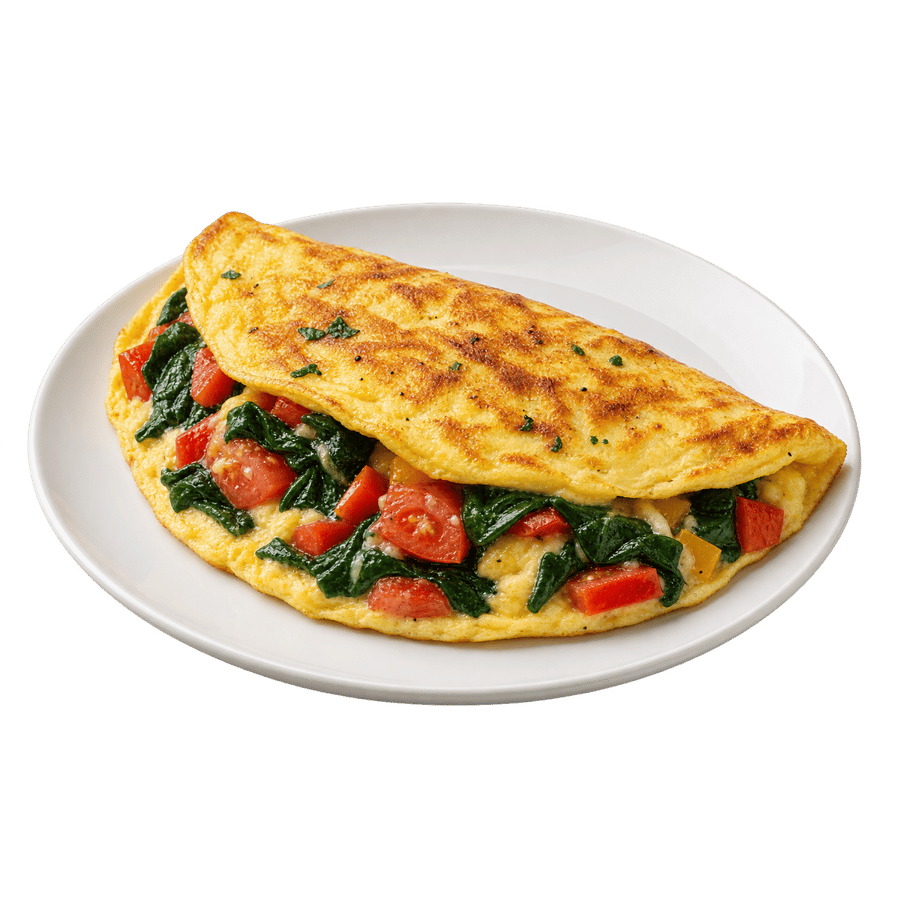
In 2019 Kevin Hall’s team at the NIH had 20 adults live in a research ward for a month. For two weeks they got ultra-processed meals, and for two weeks unprocessed ones, matched for calories, sugar, fat, fiber and salt on the plate. They could eat as much as they wanted. On the ultra-processed food they ate about 508 calories a day more and gained about 2 pounds. On the unprocessed food they lost about 2.
A useful test in the shop is whether the food still looks like it grew or walked. Packaged snacks, sweet cereals and pastries are built to be easy to keep eating.
Fiber
In the POUNDS Lost trial, 345 adults were put on calorie reduced diets with different mixes of fat, protein and carbs. When researchers looked back at what predicted weight loss, fiber was the most influential thing people ate, and it held after accounting for their calories and the mix of fat, protein and carbs. In another trial, 240 adults with metabolic syndrome were given one goal, eat 30 g of fiber a day, or the full American Heart Association diet. After a year they’d lost about 4.6 and 6.0 pounds (2.1 and 2.7 kg), so the single fiber goal got most of the way. Beans, lentils, vegetables, berries, oats and whole grains are where it comes from.
Drinks
Calories in drinks don’t fill you much. In a small study, 15 adults got an extra 450 calories a day for four weeks, once as jelly beans and once as soda. With the jelly beans they ate less of everything else and their weight held. With the soda they didn’t, and their weight went up.
Alcohol has 7 calories per gram, and the alcohol in one standard drink is about 100 calories before any mixer. Cut the sweet drinks first, then the juice, then the drinks with alcohol in them. Sparkling water, black coffee and tea are fine.
Sleep
Short sleep changes how hungry you are, and how much of what you lose is fat.
- It shifts the hormones. In a 2004 study at the University of Chicago, 12 young men spent two nights with four hours in bed and two with ten. After the short nights their leptin was 18% lower, ghrelin 28% higher and hunger 24% higher.
- It makes you eat more. A 2017 review pooled 11 studies and found people ate about 385 calories more on the day after short sleep, with no rise in what they burned.
- Fixing it makes you eat less. In a 2022 trial, 80 adults with overweight who slept under 6.5 hours were coached to sleep more. They slept about 1.2 hours more a night and ate about 270 fewer calories a day.
- It changes what you lose. Ten adults dieted for two weeks twice, once with 8.5 hours in bed and once with 5.5. They lost about the same weight, but on short sleep the share that was fat fell by 55% and the lean mass lost rose by 60%.
The CDC says adults need 7 hours or more.
Does sugar make you fat?
Sugar doesn’t store as fat any more than the same calories of anything else. In the NIH ward study on the how it works page, cutting carbs lowered insulin by about a fifth and still didn’t lose more fat than cutting fat.
Where sugar hurts is hunger. It comes in foods and drinks that are easy to keep eating and barely fill you. In a study of 1,070 people who wore glucose monitors, those whose blood sugar dipped most two to three hours after breakfast got hungry sooner. The biggest dippers ate about 312 calories more over the day than the smallest. Cut added sugar where it’s easiest, in drinks, sweets and sweet breakfasts.
Does it matter when you eat?
Not much, as long as the calories are the same. Eat on a schedule that stops you grazing.
- Many small meals don’t speed up your metabolism. A 2015 review of 15 studies found that the apparent benefit of eating more often came from a single study.
- Fasting windows don’t beat the same calories. In the TREAT trial, 116 adults who ate only between noon and 8 pm lost no more weight than people eating three meals over the day. In a year long trial in China, 139 adults on the same calories lost 8.0 kg with an 8 am to 4 pm window and 6.3 kg without, and the gap could have been chance.
- Breakfast is up to you. In a trial of 309 adults, telling people to eat breakfast or to skip it made no difference to their weight loss over 16 weeks. See does breakfast speed up your metabolism.
If fasting helps you eat less, it works. If it leaves you starving and overeating at night, three meals with protein in each will do more for you.
26 sources
- Wilding et al., Once-weekly semaglutide in adults with overweight or obesity (STEP 1), NEJM, 2021pubmed.ncbi.nlm.nih.gov
- Jastreboff et al., Tirzepatide once weekly for the treatment of obesity (SURMOUNT-1), NEJM, 2022pubmed.ncbi.nlm.nih.gov
- Wilding et al., Weight regain and cardiometabolic effects after withdrawal of semaglutide: the STEP 1 trial extension, Diabetes, Obesity and Metabolism, 2022pubmed.ncbi.nlm.nih.gov
- Aronne et al., Continued treatment with tirzepatide for maintenance of weight reduction in adults with obesity (SURMOUNT-4), JAMA, 2024pubmed.ncbi.nlm.nih.gov
- Lincoff et al., Semaglutide and cardiovascular outcomes in obesity without diabetes (SELECT), NEJM, 2023pubmed.ncbi.nlm.nih.gov
- Weigle et al., A high-protein diet induces sustained reductions in appetite, ad libitum caloric intake, and body weight despite compensatory changes in diurnal plasma leptin and ghrelin concentrations, American Journal of Clinical Nutrition, 2005pubmed.ncbi.nlm.nih.gov
- Hall et al., Ultra-processed diets cause excess calorie intake and weight gain: an inpatient randomized controlled trial of ad libitum food intake, Cell Metabolism, 2019pubmed.ncbi.nlm.nih.gov
- Miketinas et al., Fiber intake predicts weight loss and dietary adherence in adults consuming calorie-restricted diets: the POUNDS Lost study, Journal of Nutrition, 2019pubmed.ncbi.nlm.nih.gov
- Ma et al., Single-component versus multicomponent dietary goals for the metabolic syndrome: a randomized trial, Annals of Internal Medicine, 2015pubmed.ncbi.nlm.nih.gov
- DiMeglio and Mattes, Liquid versus solid carbohydrate: effects on food intake and body weight, International Journal of Obesity, 2000pubmed.ncbi.nlm.nih.gov
- Dietary Guidelines Advisory Committee, Scientific report of the 2020 Dietary Guidelines Advisory Committee, Part D chapter 11: alcoholic beverages, 2020dietaryguidelines.gov
- Spiegel et al., Sleep curtailment in healthy young men is associated with decreased leptin levels, elevated ghrelin levels, and increased hunger and appetite, Annals of Internal Medicine, 2004pubmed.ncbi.nlm.nih.gov
- University of Chicago Medicine, Sleep loss boosts appetite, may encourage weight gain, 2004uchicagomedicine.org
- Al Khatib et al., The effects of partial sleep deprivation on energy balance: a systematic review and meta-analysis, European Journal of Clinical Nutrition, 2017pubmed.ncbi.nlm.nih.gov
- Tasali et al., Effect of sleep extension on objectively assessed energy intake among adults with overweight in real-life settings, JAMA Internal Medicine, 2022pmc.ncbi.nlm.nih.gov
- Nedeltcheva et al., Insufficient sleep undermines dietary efforts to reduce adiposity, Annals of Internal Medicine, 2010pmc.ncbi.nlm.nih.gov
- Wyatt et al., Postprandial glycaemic dips predict appetite and energy intake in healthy individuals, Nature Metabolism, 2021pmc.ncbi.nlm.nih.gov
- Hall et al., metabolic ward trial of cutting fat against cutting carbohydrate in people with obesity (Calorie for calorie, dietary fat restriction...), Cell Metabolism, 2015pmc.ncbi.nlm.nih.gov
- Dennis et al., Water consumption increases weight loss during a hypocaloric diet intervention in middle-aged and older adults, Obesity, 2010pmc.ncbi.nlm.nih.gov
- Schoenfeld, Aragon and Krieger, Effects of meal frequency on weight loss and body composition: a meta-analysis, Nutrition Reviews, 2015pubmed.ncbi.nlm.nih.gov
- Lowe et al., Effects of time-restricted eating on weight loss and other metabolic parameters in women and men with overweight and obesity: the TREAT randomized clinical trial, JAMA Internal Medicine, 2020pubmed.ncbi.nlm.nih.gov
- Liu et al., Calorie restriction with or without time-restricted eating in weight loss, NEJM, 2022pubmed.ncbi.nlm.nih.gov
- Dhurandhar et al., The effectiveness of breakfast recommendations on weight loss: a randomized controlled trial, American Journal of Clinical Nutrition, 2014pubmed.ncbi.nlm.nih.gov
- Sumithran et al., Long-term persistence of hormonal adaptations to weight loss, NEJM, 2011pubmed.ncbi.nlm.nih.gov
- CDC, About sleepcdc.gov
- NIDDK, Prescription medications to treat overweight and obesityniddk.nih.gov