Fat loss tips that work
On this page
The tips that work all do one of three things: help you eat less without being hungry, keep your muscle while you lose, or show you the real trend. Here they are by topic, each with the study behind it. Pick two or three, not all of them.
What we’d do
Start with three: protein at every meal, a daily walk, and a weigh-in every morning judged by the weekly average. Add one more each week. Most tips lists fail because people try twenty things on Monday and none by Friday.
Lists of tips go wrong two ways. Some promise effects nobody has shown. Others are true but tiny, and crowd out the few that matter. Small habits work like compound interest: each one is modest, and they build on each other over months.
Food
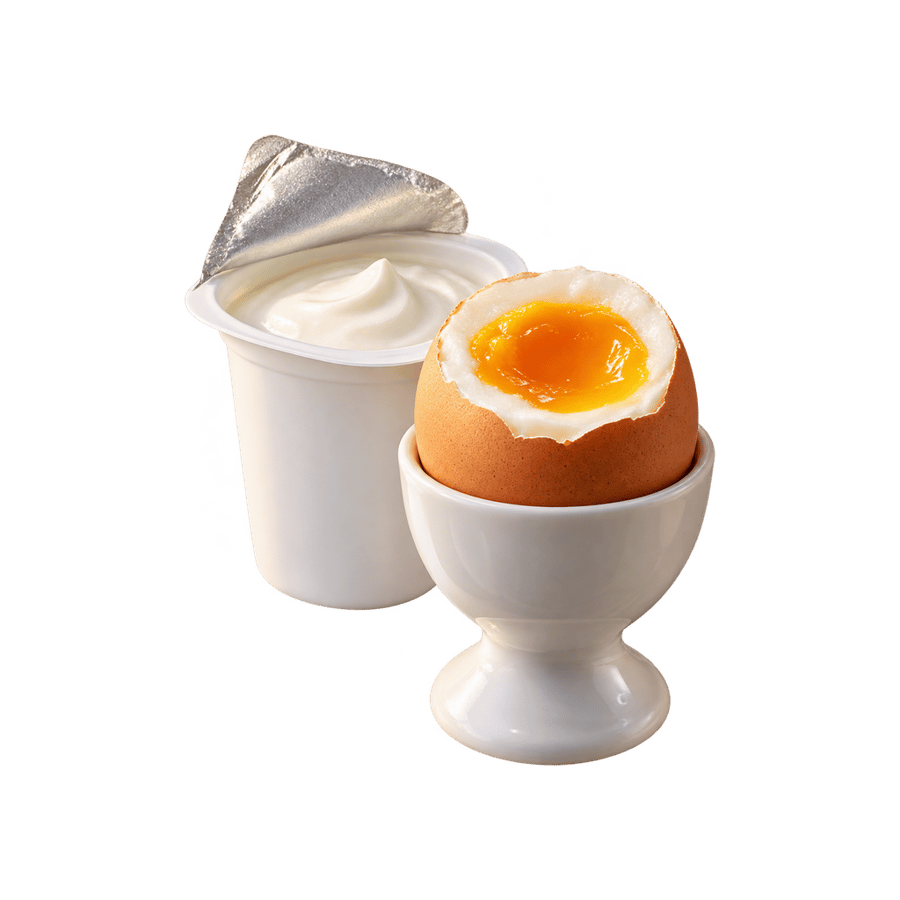
- Put protein first at every meal. In a 2016 trial, men on a hard diet with high protein gained lean mass and lost more fat than men on half the protein.
- Start with vegetables or a salad. A low-calorie salad before lunch cut the calories eaten at the meal by 7 to 12%.
- Eat food that still looks like it grew. On an ultra-processed diet, people ate about 500 more calories a day without trying.
- Eat more fiber: beans, oats, berries, vegetables. In a 6-month study of dieters, fiber predicted weight loss better than anything else.
- Don’t fear potatoes. Boiled potatoes kept people fuller than any of 38 common foods, calorie for calorie.
- Drink two cups of water before meals. In a 12-week trial of older adults on a diet, it added about 4 pounds (2 kg) of loss.
- Log everything for two weeks, weekends too. People who were sure they ate very little had underreported their food by 47%.
Movement
- Lift two or three days a week. Across 62 trials, dieting alone cost lean mass, and adding weight training kept it.
- Walk every day. Everyday movement outside the gym varies hugely between people, and in a 1999 study it predicted who stayed lean when overfed.
- Pick the cardio you’ll do. Intervals and steady cardio took off the same fat, and intervals took about 40% less time.
- Don’t eat back your watch calories. Very active people burn less extra than you’d guess, because the body cuts back elsewhere.
Sleep
- Protect your sleep while you diet. On 5.5 hours in bed, dieters lost the same weight as on 8.5 hours, but 55% less of it was fat.
- Get an extra hour. Adults who slept about 1.2 hours more a night ate about 270 fewer calories a day.
- Close the kitchen after dinner. Eating late made people hungrier in a tightly controlled study.
The scale
- Weigh every morning, after the bathroom and before food. In a 6-month trial, daily weighing with feedback lost 6.6% of weight against 0.4%.
- Judge the weekly average, not the day. Each gram of stored carbs holds at least 3 grams of water, so a carb-heavy day shows up as a gain that isn’t fat.
- Expect a bump around your period. Fluid retention peaked on the first day of flow in a year-long study of 62 women.
- Treat the bodyfat number as a trend. Home scales missed by several points in a lab test but tracked change better.
- Tape your waist once a month. Over 40 inches for men or 35 for women raises the risk of heart disease and type 2 diabetes.
Gyroscope logs your weight and bodyfat from a Withings or any Apple Health scale on its own, free on any plan.
Eating out
- Assume a restaurant meal is a big one. Meals from US restaurants averaged about 1,205 calories, and 92% held more than a person needs at one sitting.
- Order protein and vegetables first, then add the rest.
- Box half before you start if the plate is big.
- Pick your drink number before you go. A 12 oz beer has about 150 calories and a 5 oz glass of wine about 120.
- Plan the weekend. In a year-long trial, people cutting calories lost weight on weekdays and stopped on weekends.
22 sources
- Longland et al., Higher compared with lower dietary protein during an energy deficit combined with intense exercise promotes greater lean mass gain and fat mass loss, American Journal of Clinical Nutrition, 2016pubmed.ncbi.nlm.nih.gov
- Rolls, Roe and Meengs, Salad and satiety: energy density and portion size of a first-course salad affect energy intake at lunch, Journal of the American Dietetic Association, 2004pubmed.ncbi.nlm.nih.gov
- Hall et al., Ultra-processed diets cause excess calorie intake and weight gain: an inpatient randomized controlled trial of ad libitum food intake, Cell Metabolism, 2019pubmed.ncbi.nlm.nih.gov
- Miketinas et al., Fiber intake predicts weight loss and dietary adherence in adults consuming calorie-restricted diets: the POUNDS Lost study, Journal of Nutrition, 2019pubmed.ncbi.nlm.nih.gov
- Holt et al., A satiety index of common foods, European Journal of Clinical Nutrition, 1995pubmed.ncbi.nlm.nih.gov
- Dennis et al., Water consumption increases weight loss during a hypocaloric diet intervention in middle-aged and older adults, Obesity, 2010pubmed.ncbi.nlm.nih.gov
- Lichtman et al., Discrepancy between self-reported and actual caloric intake and exercise in obese subjects, New England Journal of Medicine, 1992pubmed.ncbi.nlm.nih.gov
- Xie et al., Comparing exercise modalities during caloric restriction: a systematic review and network meta-analysis on body composition, Frontiers in Nutrition, 2025pubmed.ncbi.nlm.nih.gov
- Levine, Eberhardt and Jensen, Role of nonexercise activity thermogenesis in resistance to fat gain in humans, Science, 1999pubmed.ncbi.nlm.nih.gov
- Wewege et al., The effects of high-intensity interval training vs. moderate-intensity continuous training on body composition in overweight and obese adults: a systematic review and meta-analysis, Obesity Reviews, 2017pubmed.ncbi.nlm.nih.gov
- Pontzer et al., Constrained total energy expenditure and metabolic adaptation to physical activity in adult humans, Current Biology, 2016pubmed.ncbi.nlm.nih.gov
- Nedeltcheva et al., Insufficient sleep undermines dietary efforts to reduce adiposity, Annals of Internal Medicine, 2010pubmed.ncbi.nlm.nih.gov
- Tasali et al., Effect of sleep extension on objectively assessed energy intake among adults with overweight in real-life settings, JAMA Internal Medicine, 2022pubmed.ncbi.nlm.nih.gov
- Vujović et al., Late isocaloric eating increases hunger, decreases energy expenditure, and modifies metabolic pathways in adults with overweight and obesity, Cell Metabolism, 2022pmc.ncbi.nlm.nih.gov
- Steinberg et al., The efficacy of a daily self-weighing weight loss intervention using smart scales and e-mail, Obesity, 2013pubmed.ncbi.nlm.nih.gov
- Fernández-Elías et al., Relationship between muscle water and glycogen recovery after prolonged exercise in the heat in humans, European Journal of Applied Physiology, 2015pubmed.ncbi.nlm.nih.gov
- White et al., Fluid retention over the menstrual cycle: 1-year data from the prospective ovulation cohort, Obstetrics and Gynecology International, 2011pubmed.ncbi.nlm.nih.gov
- Siedler et al., Assessing the reliability and cross-sectional and longitudinal validity of fifteen bioelectrical impedance analysis devices, British Journal of Nutrition, 2023pubmed.ncbi.nlm.nih.gov
- National Heart, Lung, and Blood Institute, Assessing your weight and health risknhlbi.nih.gov
- Urban et al., Energy contents of frequently ordered restaurant meals and comparison with human energy requirements and US Department of Agriculture database information: a multisite randomized study, Journal of the Academy of Nutrition and Dietetics, 2016pubmed.ncbi.nlm.nih.gov
- Racette et al., Influence of weekend lifestyle patterns on body weight, Obesity, 2008pubmed.ncbi.nlm.nih.gov
- US Department of Agriculture and Department of Health and Human Services, Dietary Guidelines for Americans 2015-2020, Appendix 9, Alcoholwebharvest.gov