Why your daily burn drops while you lose weight
On this page
Your burn drops because a smaller body costs less to run, you move less without noticing, your muscles get more efficient, and your watch recalculates for your new weight. Most of it is size. The rest is usually somewhere between 50 and 400 calories a day.
What we’d do
Expect it and plan for it. Re-work your calories every 10 to 15 pounds. Keep your daily steps where they were at the start, because that’s the part that slips most. Keep lifting and eating protein so you keep the muscle that holds your burn up. On a long diet, take a break at maintenance every couple of months. And stop using the watch’s calorie number to decide how much to eat.
If you remember three things
- Most of the drop is the smaller body. About 10 calories a day for every pound you’ve lost.
- The extra drop is mostly in movement. In the Columbia studies, up to 85 to 90% of the shortfall came from activity, not from your resting burn.
- Your watch number falls partly because you weigh less. Apple’s watch uses your weight in its estimate, and every watch’s calories can be off by 20% or more.
“I’m losing weight and working out, so why are my calories going down?”
It’s one of the most common questions in fat loss. You’re training more than ever, the scale is moving, and the daily calories on your watch or in your app keep sliding. It feels like your body is fighting you, and people start looking up “starvation mode” and damaged metabolisms.
Your body is adjusting, and most of the adjustment is ordinary. A lighter car uses less gas on the same trip. Your body is the same, and on top of that it starts saving gas wherever it can.
The Biggest Loser, six years later
Sixteen people with obesity spent 30 weeks on the TV show The Biggest Loser, on a strict diet with heavy exercise. In 2016 Kevin Hall’s team at the NIH published what had happened to 14 of them over the next six years.
At the end of the show they had lost about 128 pounds (58.3 kg) on average. Six years later they had regained about 90 pounds (41.0 kg) of it. Their resting burn had dropped by about 610 calories a day by the end of the show, and six years later it was about 700 calories a day below where it had started.
Some of that is just a smaller body. But even after accounting for their new size, their resting burn was about 275 calories a day lower than expected at the end of the show, and about 500 lower six years later. The people who had kept the most weight off had slowed the most.
This was an extreme case, with very fast loss and huge amounts of exercise, so it isn’t what most people should expect.
Where does the burn go?
Here’s what changes as you lose, for a 200 pound person who has lost 30.
- A smaller body costs less. Every pound lost lowers the calories you need by about 10 a day. Thirty pounds is about 300 a day, from resting and from carrying less weight around.
- Your body adapts beyond its size. After a 10% loss, burn can fall another 10 to 15% below what the new size predicts, roughly 300 to 400 calories a day, though in other studies it was much smaller.
- Most of that adaptation is in movement. In the Columbia studies, activity accounted for up to 85 to 90% of the shortfall. Some of it is moving less without noticing, and some is that the same movement costs less.
- Your muscles get more efficient. After weight loss, muscles in the Columbia lab were about 20% more efficient at light cycling. You do the same work for fewer calories.
- Workouts get partly made up. On average about 28% of the calories you burn in activity are made up elsewhere in the day, more in people with more bodyfat.
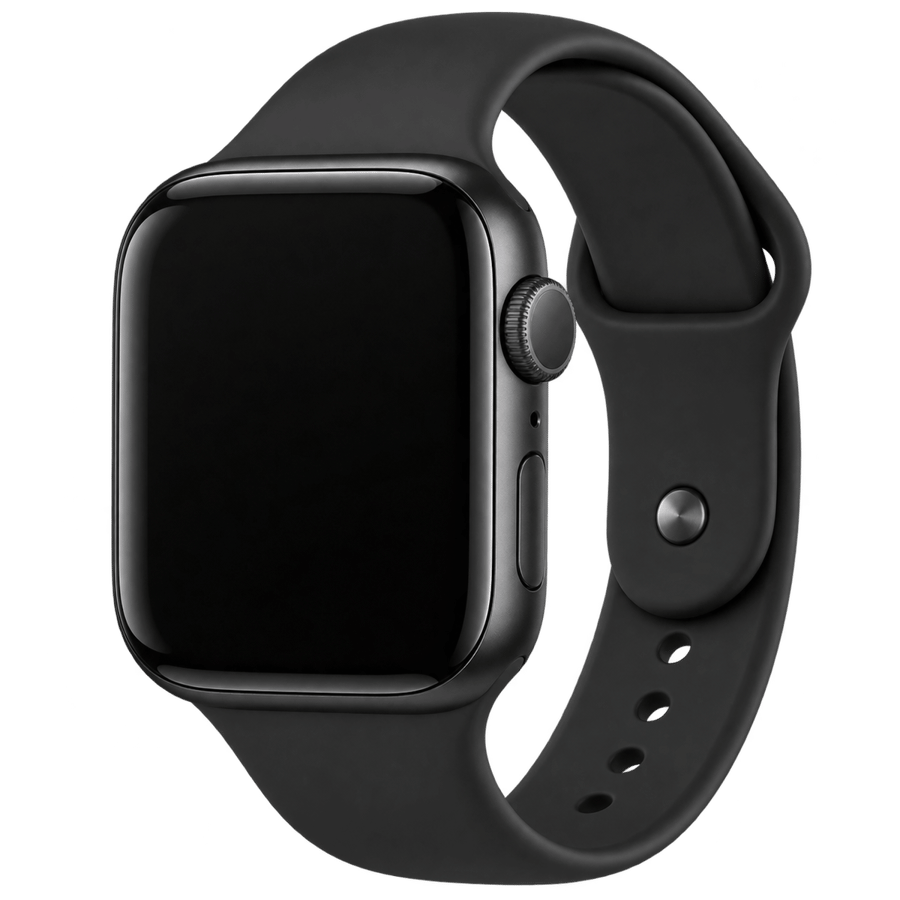
- Your watch recalculates. Apple says its watch uses your height, weight, sex and age to estimate calories. Update your weight and the same walk shows fewer calories.
| What changed | Size, for a 200 pound person who lost 30 | How sure we are |
|---|---|---|
| Smaller body | About 300 calories a day | Strong, from modeling many trials |
| Adaptation beyond size | About 50 to 400 calories a day, depending on the study and when it’s measured | Moderate. Real, but the size is argued over |
| Workout made up elsewhere | About 28% of what the workout burned | Moderate, from one large pooled study |
| Watch estimate | Drops with your weight, and is off by 20% or more anyway | Strong for the error |
Is your metabolism damaged?
The case that it’s lasting
It can last for years. The Biggest Loser contestants still burned about 500 calories a day less than their size predicted six years later.
It lasts at a stable weight. In a small study, Michael Rosenbaum and Rudolph Leibel at Columbia compared people at their usual weight with people who had recently lost 10% and people who had kept 10% off for more than a year. The drop in daily burn was about the same in both groups who’d lost.
The case that it’s small
Measured at a stable weight, it’s small. In a 2020 study of 171 women who lost about 26 pounds, the adaptation was about 54 calories a day after four weeks of holding their weight. A year and two years later it was too small to measure.
It didn’t predict regain. The women who adapted more didn’t gain more back. At the end of The Biggest Loser, adaptation didn’t predict who would regain either.
It can be reversed. In a small Columbia study, low doses of leptin, a hormone that falls when you lose fat, brought burn and muscle efficiency back to where they’d been before the loss.
Nobody’s metabolism breaks (more on starvation mode). Your body turns its spending down when it has less fat in savings, and how far it turns it down varies from person to person and depends a lot on when it’s measured. For most people the drop from size is the big one, and the adaptation is a smaller extra. The thing that pulls weight back on afterward is mostly appetite. For every kilogram lost, appetite rose by about 100 calories a day in a 2016 analysis, more than three times the drop in burn.
How do you deal with it?
- Re-work your calories every 10 to 15 pounds. The maintenance calculator at your new weight, then your trend, tell you the new number.
- Keep your steps steady. Movement is where most of the adaptation hides. Look at your average steps from the first two weeks of the diet, and keep at least that.
- Lift and eat protein. Muscle keeps your burn up. In a 2017 trial, older adults who lifted while dieting lost 2% of their lean mass against 5% for those who only did cardio.
- Take diet breaks on a long diet. In the MATADOR trial, men who dieted in two week blocks with two week breaks at maintenance lost more fat, and their resting burn fell about half as much once their new size was accounted for. How long to diet before a break has the details.
- Slow down as you get leaner. Faster loss takes more muscle when you have less fat to spare.
- Stop eating by the watch. In a Stanford test of seven devices, calorie estimates were off by 27% to 93%. A 2025 review of Apple Watch studies found every calorie estimate missed by more than 10%. Use your scale trend.
15 sources
- Hall et al., Quantification of the effect of energy imbalance on bodyweight, The Lancet, 2011pmc.ncbi.nlm.nih.gov
- Rosenbaum and Leibel, Adaptive thermogenesis in humans, International Journal of Obesity, 2010pmc.ncbi.nlm.nih.gov
- Rosenbaum et al., Long-term persistence of adaptive thermogenesis in subjects who have maintained a reduced body weight, American Journal of Clinical Nutrition, 2008pubmed.ncbi.nlm.nih.gov
- Rosenbaum et al., Effects of experimental weight perturbation on skeletal muscle work efficiency in human subjects, American Journal of Physiology, 2003pubmed.ncbi.nlm.nih.gov
- Leibel, Rosenbaum and Hirsch, Changes in energy expenditure resulting from altered body weight, NEJM, 1995pubmed.ncbi.nlm.nih.gov
- Fothergill et al., Persistent metabolic adaptation 6 years after The Biggest Loser competition, Obesity, 2016pmc.ncbi.nlm.nih.gov
- Martins et al., Metabolic adaptation is not a major barrier to weight-loss maintenance, American Journal of Clinical Nutrition, 2020pubmed.ncbi.nlm.nih.gov
- Byrne et al., Intermittent energy restriction improves weight loss efficiency in obese men: the MATADOR study, International Journal of Obesity, 2018pmc.ncbi.nlm.nih.gov
- Careau et al., Energy compensation and adiposity in humans, Current Biology, 2021pubmed.ncbi.nlm.nih.gov
- Apple, Get the most accurate measurements using your Apple Watchsupport.apple.com
- Shcherbina et al., Accuracy in wrist-worn, sensor-based measurements of heart rate and energy expenditure in a diverse cohort, Journal of Personalized Medicine, 2017pmc.ncbi.nlm.nih.gov
- Choe et al., Apple Watch accuracy in monitoring health metrics: a systematic review and meta-analysis, Physiological Measurement, 2025pubmed.ncbi.nlm.nih.gov
- Polidori et al., How strongly does appetite counter weight loss? Quantification of the feedback control of human energy intake, Obesity, 2016pubmed.ncbi.nlm.nih.gov
- Villareal et al., Aerobic or resistance exercise, or both, in dieting obese older adults, NEJM, 2017pubmed.ncbi.nlm.nih.gov
- Rosenbaum et al., Low-dose leptin reverses skeletal muscle, autonomic, and neuroendocrine adaptations to maintenance of reduced weight, Journal of Clinical Investigation, 2005pubmed.ncbi.nlm.nih.gov