Does muscle turn into fat when you stop lifting?
Short answerNo
On this page
No. Muscle and fat are different tissues, made of different cells, and one can’t turn into the other. When you stop training, your muscles shrink. If you keep eating the way you did when you trained, the extra food is stored as fat. It looks like a swap, but it’s two separate changes at once.
What we’d do
If you have to stop lifting for a while, keep a little of it going, even one short session a week, and keep your protein up. Cut your food back to match the lower activity, and weigh yourself so you see any change early.
If you remember three things
- Muscle can’t become fat, and fat can’t become muscle.
- Stopping does two things at once: muscle shrinks, and unchanged eating can add fat.
- Adjust your food when your training drops, and the fat part doesn’t happen.
Why it looks like a swap
If someone stops training and keeps eating the same, their arms get smaller and their waist gets bigger, so it looks as if the muscle melted into fat. The American Council on Exercise puts it plainly: muscle will not and cannot turn into fat. The two are separate tissues. What happened was two changes, side by side.
It’s like a store that closes one aisle and expands another. Nothing moved from one to the other. One shrank and the other grew.
What actually happens
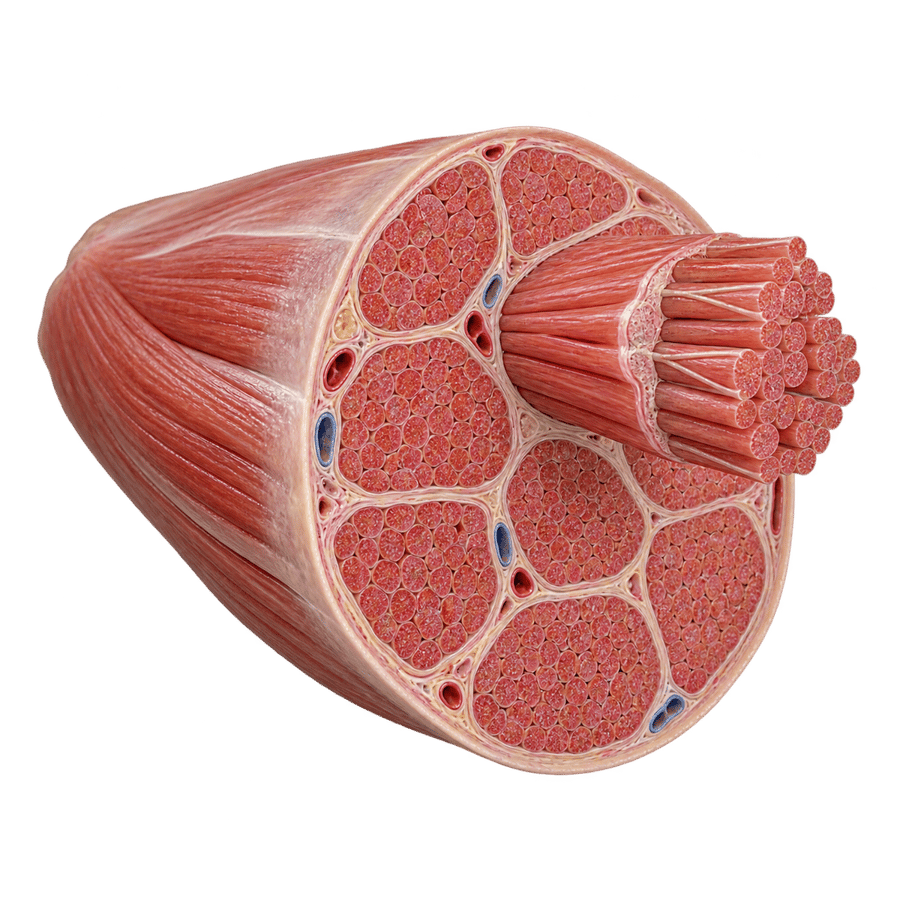
Muscle shrinks. Muscle you stop using gets smaller over weeks and months. The body keeps the tissue you use.
Fat can grow, for a simple reason. If you keep eating like you still train, you eat more than you now burn, and the extra is stored.
Age adds to it. In women going through menopause, a large US study found lean mass turned from slowly rising to slowly falling while fat gain sped up, even at a steady weight. The body was changing its makeup without any change on the scale.
The same is true in reverse
Fat can’t turn into muscle either. When someone starts lifting and their shape changes, they’re building muscle and losing fat at the same time. In an 8-month trial, sedentary adults who only lifted gained about 2.4 pounds (1.1 kg) of lean mass and lost a little fat, with no diet change. Two changes again, in the other direction.
How to stop it happening
You don’t need your full old program. Keep some lifting, even one short session a week, so the muscle is still being used. Keep your protein up, at least 1.2 g per kg of body weight a day (find your range). And keep moving: people in the National Weight Control Registry, who lost at least 30 pounds and kept it off, average about an hour of activity a day. Then match your food to your new routine, and check your waist once a month so you catch any change early.
More detail: why stopping training doesn’t change your burn as much as people fear
People often expect their metabolism to crash when they stop training. A 2016 study of 332 adults found that the calories people burn in a day rise with activity at low levels and then level off, so very active people burn less extra than you’d guess. A 2021 study of 6,421 people found that daily energy use, adjusted for body size, stays steady from about age 20 to 60. So the fat that appears after stopping usually comes from eating more than you now need, which is the part you can control.
6 sources
- American Council on Exercise, Breaking down fitness myths and misconceptions, 2018acefitness.org
- Willis et al., Effects of aerobic and/or resistance training on body mass and fat mass in overweight or obese adults (STRRIDE AT/RT), Journal of Applied Physiology, 2012pmc.ncbi.nlm.nih.gov
- Pontzer et al., Daily energy expenditure through the human life course, Science, 2021pmc.ncbi.nlm.nih.gov
- Pontzer et al., Constrained total energy expenditure and metabolic adaptation to physical activity in adult humans, Current Biology, 2016pubmed.ncbi.nlm.nih.gov
- Wing and Phelan, Long-term weight loss maintenance, American Journal of Clinical Nutrition, 2005pubmed.ncbi.nlm.nih.gov
- Greendale et al., Changes in body composition and weight during the menopause transition (SWAN), JCI Insight, 2019insight.jci.org